
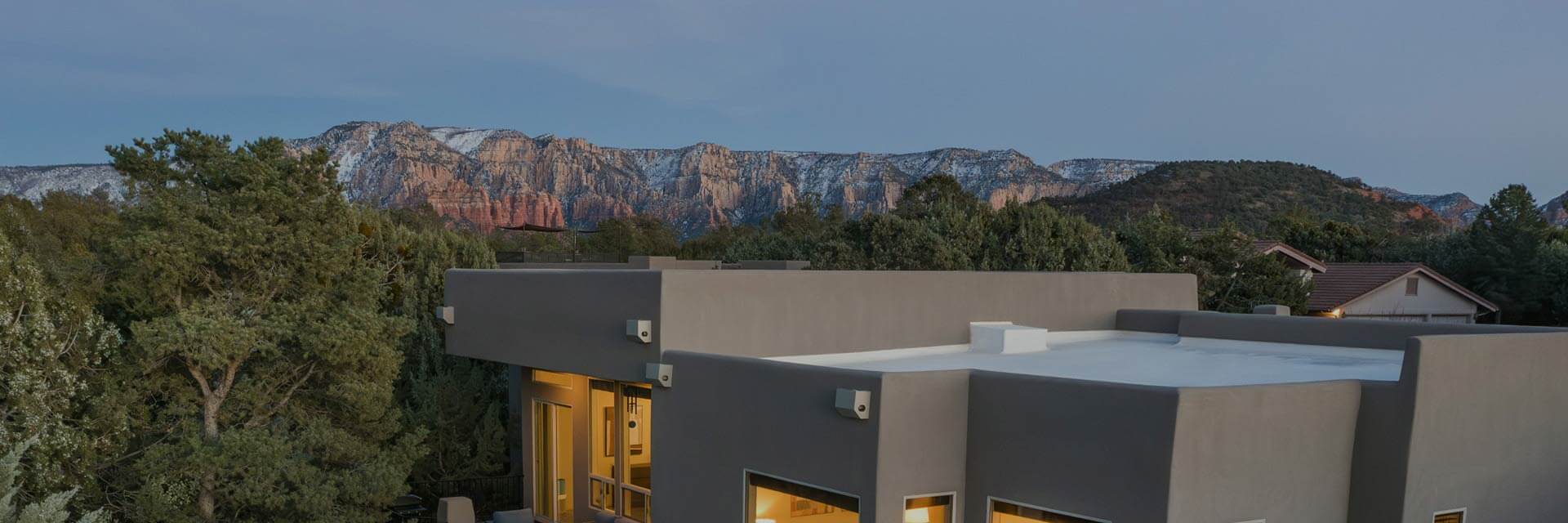
Sedona’s red rock landscape hides some of Arizona’s most photogenic secrets—cave alcoves, ancient cliff dwellings, and wind-carved tunnels that offer views you won’t find anywhere else in red rock country. Whether you’re chasing the perfect photo or seeking a spiritual connection with the land, these formations deliver experiences that go far beyond the typical scenic overlook.
From the iconic Subway Cave to remote sunset alcoves off beaten path forest roads, this guide covers the caves worth adding to your next trip. Ready to explore? Book a luxury vacation rental in Sedona first, then read on to discover the best Sedona caves waiting for your adventure.
1. Subway Cave: Boynton Canyon’s Iconic Tunnel
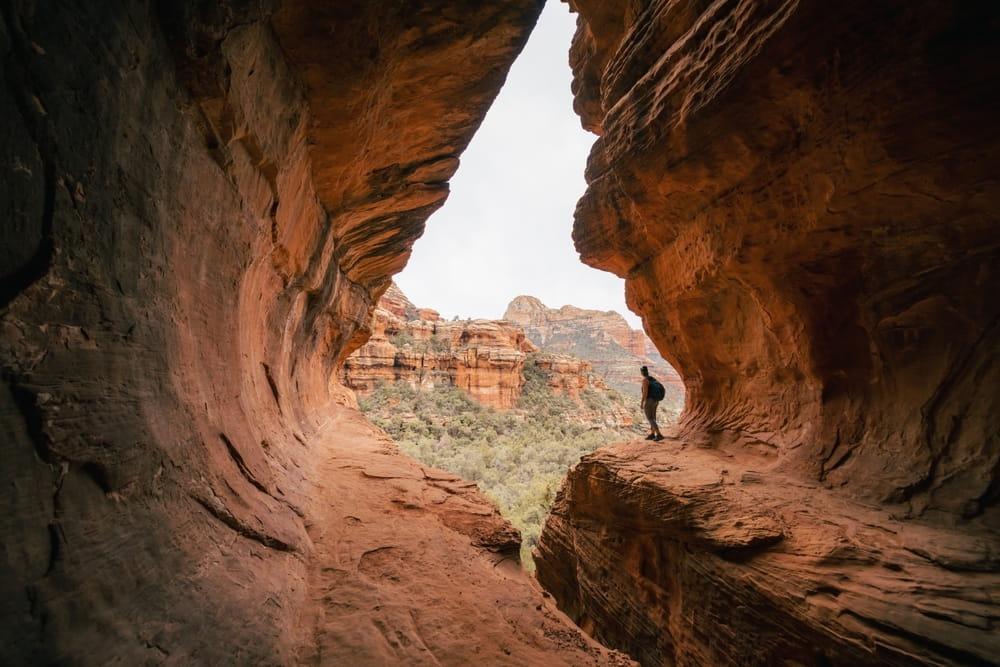
Photo Credit: arboursabroad.com
- Trailhead: Boynton Canyon Trailhead off Boynton Canyon Road, West Sedona
- Distance: ~6–6.5 miles round trip
- Difficulty: Moderate to hard
- Significance: One of the most popular Sedona caves for photography; adjacent Sinagua ruins add cultural depth
Subway Cave has earned its reputation as one of the most photographed spots in all of Arizona. This narrow sandstone tunnel sits hidden off the main Boynton Canyon Trail, rewarding hikers who make the steep climb with a sloped “subway tube” of smooth red rock that seems almost too perfect to be natural.
To reach it, follow the Boynton Canyon Trail past the Enchantment Resort buildings, continuing into the canyon for roughly 2 miles. Watch for a distinctive Alligator Juniper tree on your right side—this marks the general area where you’ll leave the main trail. The side path is unmarked but has become obvious from foot traffic.
Once you arrive, you’ll find narrow ledge walking leads to the cave entrance, with a side spur connecting to ancient Sinagua cliff dwellings on the adjacent ridge. The ruins are culturally sensitive sites—admire from a distance but never enter or touch them.
2. Soldiers Pass Cave & Spirit Caves: Red Rock Windows
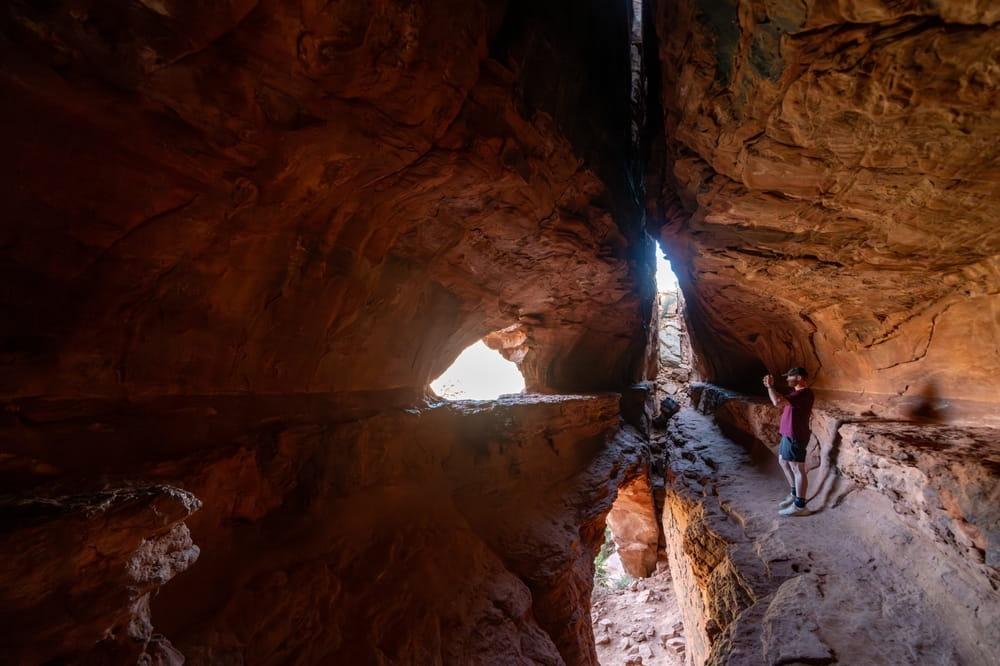
Photo Credit: melissamn
- Trailhead: Soldiers Pass Trailhead (residential neighborhood, limited parking)
- Distance: ~4.5 miles round trip for main loop; cave spur adds 0.6–0.8 miles
- Difficulty: Moderate (steep scramble near caves)
- Significance: Combines geological wonders (Devil’s Kitchen sinkhole, Seven Sacred Pools) with dramatic cave “windows”
Soldiers Pass delivers a classic Sedona loop that packs multiple attractions into a few hours of hiking. The trail passes Devil’s Kitchen—a massive sinkhole that collapsed in the late 1800s, dropping nearly 200 feet into the earth. This dramatic feature offers visible evidence of the solution caves that have formed in the redwall limestone hundreds of feet below.
To reach Soldiers Pass Cave, follow the main trail for about 1.3 miles, then watch for a signed or user-made spur on the right. This path climbs steeply up to a set of cave “windows” carved into the red rock. Inside, you’ll find tall, narrow rooms with natural windows that frame West Sedona below. Mid-day visitors catch beams of light streaming through the openings—a photographer’s dream.
3. Birthing Cave: Short Hike, Big Panorama
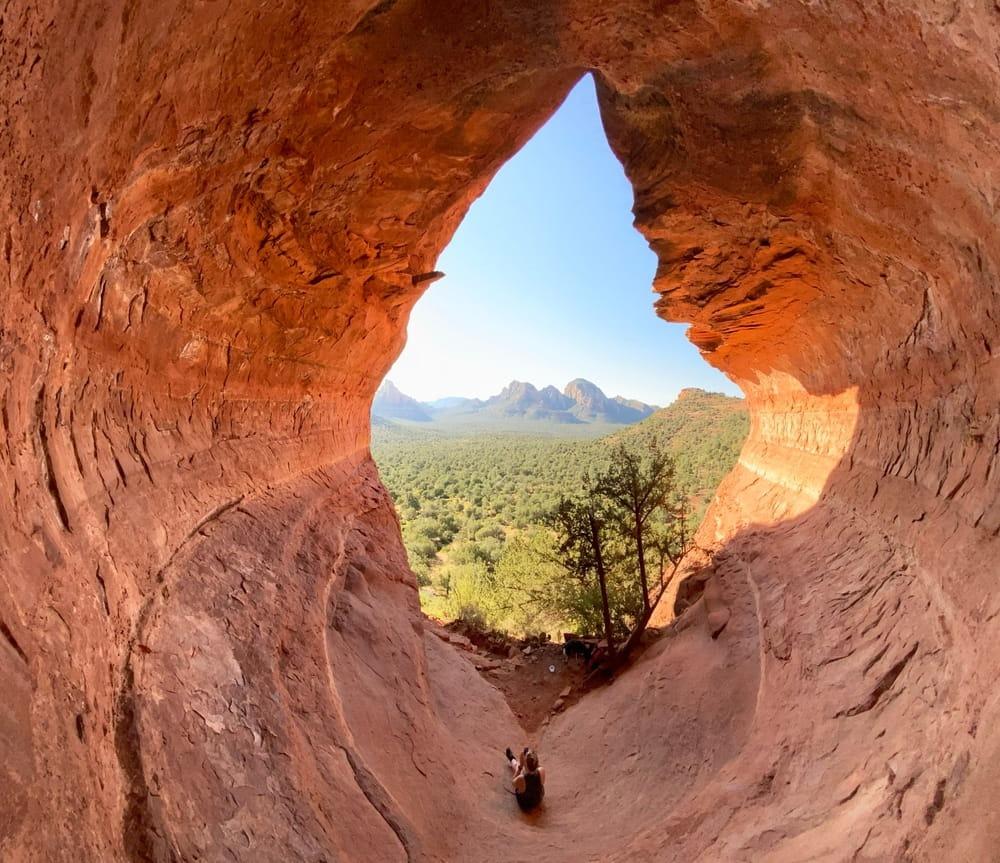
Photo Credit: Amberborromeo
- Trailhead: Long Canyon Trailhead, Long Canyon Road, West Sedona
- Distance: ~2 miles round trip
- Difficulty: Easy to moderate
- Significance: Spiritual importance as a site associated with fertility and rebirth; commonly referred to by locals as a place of meditation
Birthing Cave is a wide, shallow alcove that has become one of the most popular Sedona caves for its panoramic views and dramatic “fish-eye” style photos. The location draws visitors seeking both adventure and spiritual connection—some believe the cave holds special energy related to new beginnings.
Start on Long Canyon Trail and follow the wide path for about 0.6–0.7 miles. At an open clearing, turn left toward the cliff band. At the fork, stay left again toward the cave. The final approach climbs a steep, dusty slope into the alcove, becoming slick rock near the back wall.
The cave rewards the climb with sweeping views across the canyon. Unlike some hidden gems that very few people know about, Birthing Cave sees steady traffic—but its accessibility makes it perfect for hikers who want a meaningful experience without an all-day commitment.
For experienced hikers who start early and come prepared with GPS coordinates, consider pairing Birthing Cave with Subway Cave or Kachina Tree Cave in Boynton Canyon on the same day.
4. Keyhole Cave: Dramatic, Exposed
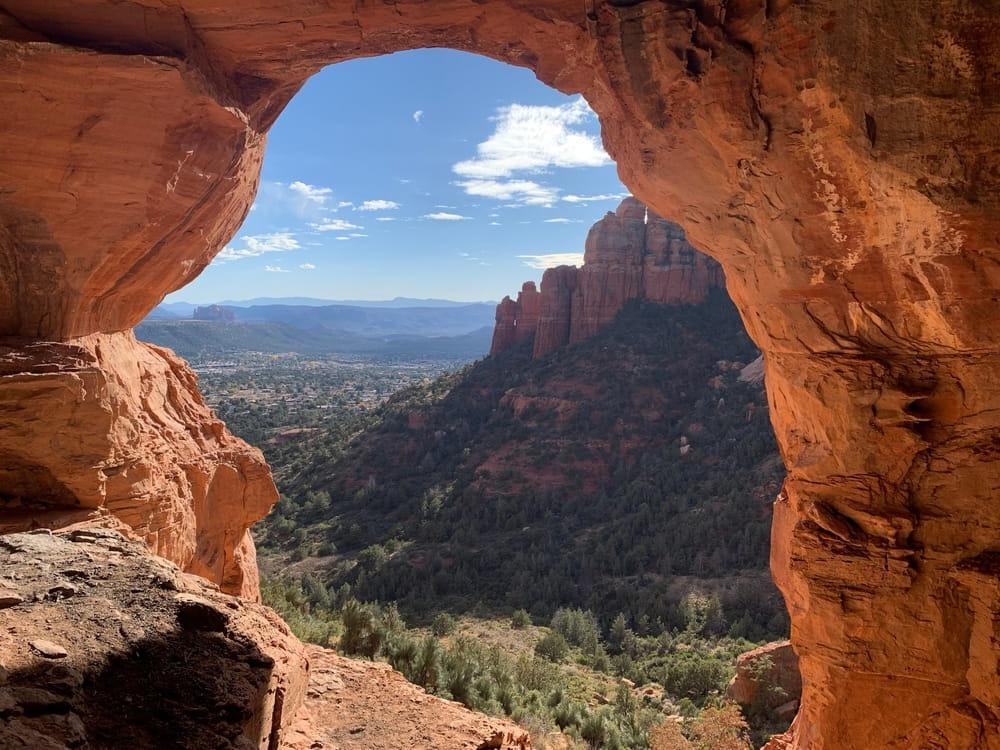
Photo Credit: ethanmcnew
- Trailhead: Near Sugarloaf Trailhead
- Distance: ~2–3 miles round trip (route dependent)
- Difficulty: Hard—steep, loose terrain with Class 2–3 scrambling
- Significance: One of the most dramatic natural windows in Sedona; frames Thunder Mountain and Coffeepot Rock
Visible high on the cliffs above West Sedona, Keyhole Cave draws hikers who’ve heard about its massive natural window and stunning views. This is not a kid-friendly outing—the approach involves serious scrambling and exposure that demands confidence and experience.
The most common route starts near Sugarloaf Trailhead, follows Teacup Trail to the Thunder Mountain Trail junction, then follows the wash that leads directly to the cave’s base. From there, the real challenge begins. The last 200–300 yards involve a very steep, eroded slope and Class 2–3 scrambling into the cave. Polished slabs and significant exposure mean falls here are serious.
For those who make it, the payoff is extraordinary. The massive keyhole-shaped opening frames Thunder Mountain and Coffeepot Rock in a composition that draws photographers from across the country. Sunrise and late afternoon light create the most dramatic photos.
5. Kachina Tree Cave and Other Boynton Canyon Hidden Alcoves
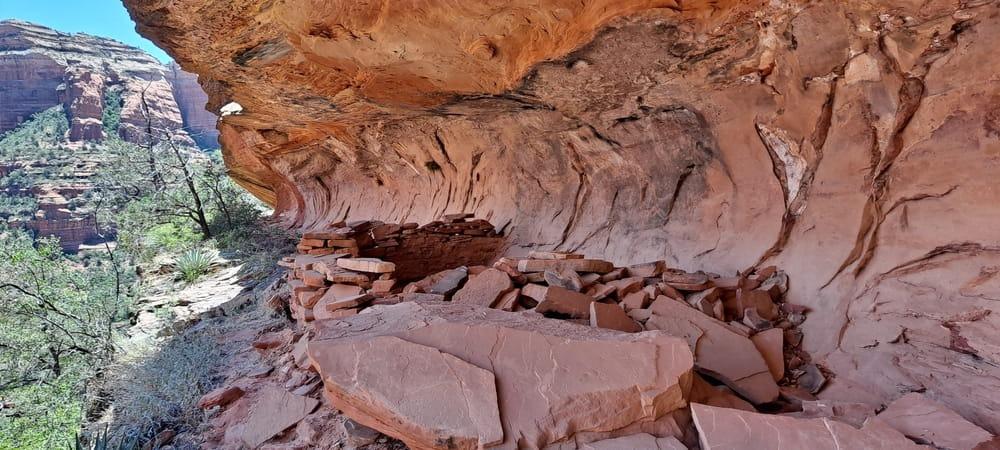
Photo Credit: Muellenberg1
- Trailhead: Boynton Canyon Trailhead
- Distance: Around 2.7 miles round trip
- Difficulty: Moderate with short, rugged segments
- Significance: Culturally sensitive area with Sinagua ruins nearby; some sites hold spiritual importance for local tribes and New Age practitioners
Boynton Canyon is renowned for its balanced energies and is considered one of Sedona's famous vortexes, attracting visitors seeking spiritual renewal and harmony amid the stunning landscape.
Boynton Canyon hides several lesser-known alcoves beyond Subway Cave, including Kachina Tree Cave—a large arch-like cavity distinguished by a tree growing from inside or directly in front of the opening. This spot has gained popularity among photographers since around 2020, though it remains off the beaten path compared to more famous locations.
The cave is accessed from the main Boynton Canyon Trail via an unmarked and steeper side route. Expect cactus-lined slopes and some scramble sections. While not as exposed as Keyhole Cave, the terrain still demands attention.
Other named sites in the canyon—Dream Speaker Cave, Grandmother’s Cave, the Kachina Woman Rock area—exist but are often treated as sacred or sensitive by Indigenous communities and spiritual practitioners. Respect for archaeological features is essential here. Do not enter or touch any rooms, walls, or pottery fragments near these alcoves. Keep a wide buffer around any ruins you encounter. These sites represent centuries of human history that deserve protection.
6. Shaman’s Cave and Robber’s Roost: Remote Sunset Alcove
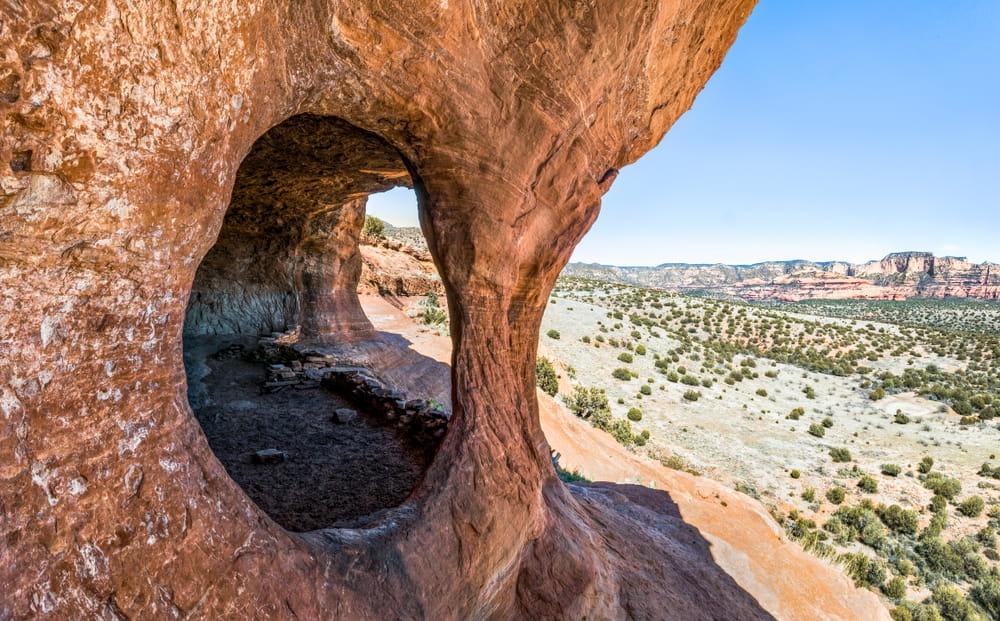
Photo Credit: Kenneth Keifer
- Trailhead: Robber's Roost Trailhead, accessed via Forest Road 525/525C
- Distance: ~2.5–3 miles round trip
- Difficulty: Easy to moderate (short rocky sections with exposure near the cave)
- Significance: Historic hideout (hence “Robber’s Roost”); popular with New Age visitors seeking meditation sites
Shaman’s Cave offers something different from the in-town favorites: a remote, quiet alcove with a natural window framing distant red rock mesas. Located off rough dirt roads northwest of Sedona, this cave in Sedona rewards hikers willing to leave the crowds behind.
Getting there requires driving several miles on graded but often washboarded Forest Road 525. High-clearance vehicles handle the route more comfortably, though careful drivers in low-clearance sedans can make it on dry days. Avoid the road when muddy.
The cave itself is a broad chamber with a west-facing window, making it ideal for sunset photography. The atmosphere here feels markedly different from busier sites—you might find yourself sharing the space with just a few other visitors, or none at all.
The historical background adds intrigue: the name “Robber’s Roost” traces to the cave’s use as a hideout, while “Shaman’s Cave” reflects its more recent appeal among New Age visitors, despite limited evidence of traditional ceremonial use.
7. Raven Caves and Easy Intro Caves Near Sedona
- Trailhead: Raven Caves Trailhead, a small roadside parking area
- Distance: Under 1 mile round trip
- Difficulty: Easy
- Significance: Accessible introduction to cave exploring; family-friendly with proper supervision
Raven Caves offer a short, low-effort introduction to cave exploring, making them perfect for visitors short on time or new to desert hiking. The small roadside parking lot naturally limits crowd size, keeping this spot relatively low-key compared to Subway or Birthing Cave.
The walk covers less than a mile with minimal elevation gain, making it accessible for most people who can handle uneven terrain. Multiple smaller chambers and openings sit above a wash, offering shaded breaks and opportunities for fun exploration for the careful hiker.
This is an excellent option for families looking to introduce kids to the magic of Sedona’s geology without committing to a half-day adventure.
Seasons to Visit Sedona Caves
Timing your Sedona visit correctly can make the difference between a memorable adventure and a miserable slog through heat or crowds. Here’s what to expect throughout the year.
Spring (March–May)
The sweet spot for most hikers. Morning temperatures hover in the 40s–60s °F with afternoons reaching the comfortable 60s–80s °F. Wildflowers may be blooming, and the light is excellent for photography. Expect crowds, especially on weekends.
Summer (June–September)
Afternoons regularly exceed 90–100 °F with little shade on approach hikes. If you must visit during summer, start before sunrise and carry at least 2–3 liters of water per person—the heat is no joke. Monsoon season runs from July through early September, bringing brief but intense thunderstorms. Lightning poses serious risks on exposed ledges and high points, so check forecasts and avoid caves if storms are predicted.
Fall (Late October–November)
Another prime season with cooling temperatures and thinning crowds after the October rush. The light takes on a golden quality that photographers love.
Winter (December–February)
Excellent for crowd avoidance, but canyon floors and shaded rock near caves may hold ice after storms. Some trails close temporarily after heavy snow.
Access Passes for Sedona Caves
Most trailheads sit on Coconino National Forest land, and many require a Red Rock Pass or America the Beautiful Pass displayed on your vehicle. Without one of the following, you risk getting ticketed:
- Daily Red Rock Pass: $5, available at trailhead machines, gas stations, and grocery stores
- Weekly Red Rock Pass: $15, available at the same locations as the daily pass
- America the Beautiful Pass: $80/year, purchase at Recreation.gov, REI, and National Forest offices
The America the Beautiful Pass works at most National Forest fee lots and covers entrance to national parks across the country—a smart investment for frequent explorers.
Respecting Sedona’s Sacred Landscapes
Many Sedona caves and alcoves are connected to Yavapai-Apache traditions and other Indigenous stories, as well as to more recent New Age spiritual practices. Whether or not these meanings resonate with you personally, approaching with quiet respect honors both the land and the people whose history is woven into it.
At sites like Grandmother’s Cave, Kachina areas, and any cliff dwellings, keep your voice down, avoid playing music, and never climb on ruins or collect artifacts. These aren’t just photo opportunities—they’re pieces of living history.
If the main caves feel overcrowded on your visit, consider less-trafficked trails or guided experiences. Spreading impact across more sites helps preserve the most popular locations for future visitors.
Core Leave No Trace principles apply with extra importance in Sedona's indigenous caves:
- Stay on durable surfaces
- Never write or carve on walls
- Pack out all trash, including toilet paper
- Avoid building rock stacks or cairns where none exist
- Leave everything exactly as you found it
Follow history's footsteps at Sedona’s Caves
Sedona’s caves offer windows into millions of years of geological history and centuries of human story. From the smooth sandstone tunnels of Subway Cave to the remote sunset views at Shaman’s Cave, each site tells its own tale—shaped by water, wind, and the people who have walked these paths before you.
Whether you're drawn by the stunning natural beauty, ancient history, or the thrill of discovery, Sedona's caves offer unforgettable adventures that connect you deeply with the spirit of red rock country—so book your base in Sedona, lace up your hiking boots, and get ready to explore some of Sedona's most mystifying landscapes.